The short version
Keep ticks away by mowing, raking leaf litter, and adding a 3-foot wood-chip barrier at the yard edge, keeping play areas sunny, and protecting people and pets with repellents and tick checks.
- Mow, rake leaf litter, and add a wood-chip barrier at the edge.
- Keep play areas in open, sunny spots.
- Use repellents, tick checks, and vet-approved pet prevention.
- Fewer deer and mice means fewer ticks.
For homeowners who want to keep ticks away before they become a problem — or keep them from coming back.
What to look for
Ticks need two things: a shaded, humid place to wait, and a host to grab. Your yard provides the first; you and your pets provide the second. Prevention is about removing the waiting spots and interrupting the grab.
- 1Ticks on pets after walks or time outdoors.
- 2Ticks on clothing or skin after yard work.
- 3A tick found indoors or on pet bedding.
- 4Deer, mice, or other wildlife passing through the yard.
- 5Tall grass, leaf litter, or brush at the yard edge.
- 6Stone walls, woodpiles, or brush near play areas.
Why it’s worth acting soon
- Tick-borne illness for people and pets.
- More ticks each year as wildlife and hosts move through.
- Brown dog ticks can establish indoors and are hard to remove.
About 476,000People estimated to get Lyme disease each year in the U.S.CDC 36–48 hoursTime a blacklegged tick usually needs attached to transmit LymeCDC 21%U.S. households where someone found a tick (HealthStyles, 2009)Hook et al., CDC Treatment options and typical costs
Yard inspection and tick-zone mapping
$75–$200
A pro walks the property edges and maps the zones that actually hold ticks.
- Time
- 45–90 minutes
- Best for
- Every job; shows where ticks actually live.
Targeted edge treatment
$100–$350 per application
A residual acaricide applied along a narrow band at the yard edge, timed to spring and fall peaks.
- Time
- 30–60 minutes
- Best for
- Spring and fall peaks.
Tick tubes and host management
$200–$1,500+
Rodent-targeted tubes and deer-deterrent changes that cut the hosts ticks feed on.
- Time
- Half day to full day
- Best for
- Yards bordering woods with deer and mouse traffic.
Habitat modification
$150–$450
Leaf-litter removal, mowing, and a wood-chip barrier between lawn and woods.
- Time
- 2–4 hours, then ongoing
- Best for
- Every yard with woods or brush at the edge.
Prices are typical published ranges. Ask what’s included before you compare quotes.
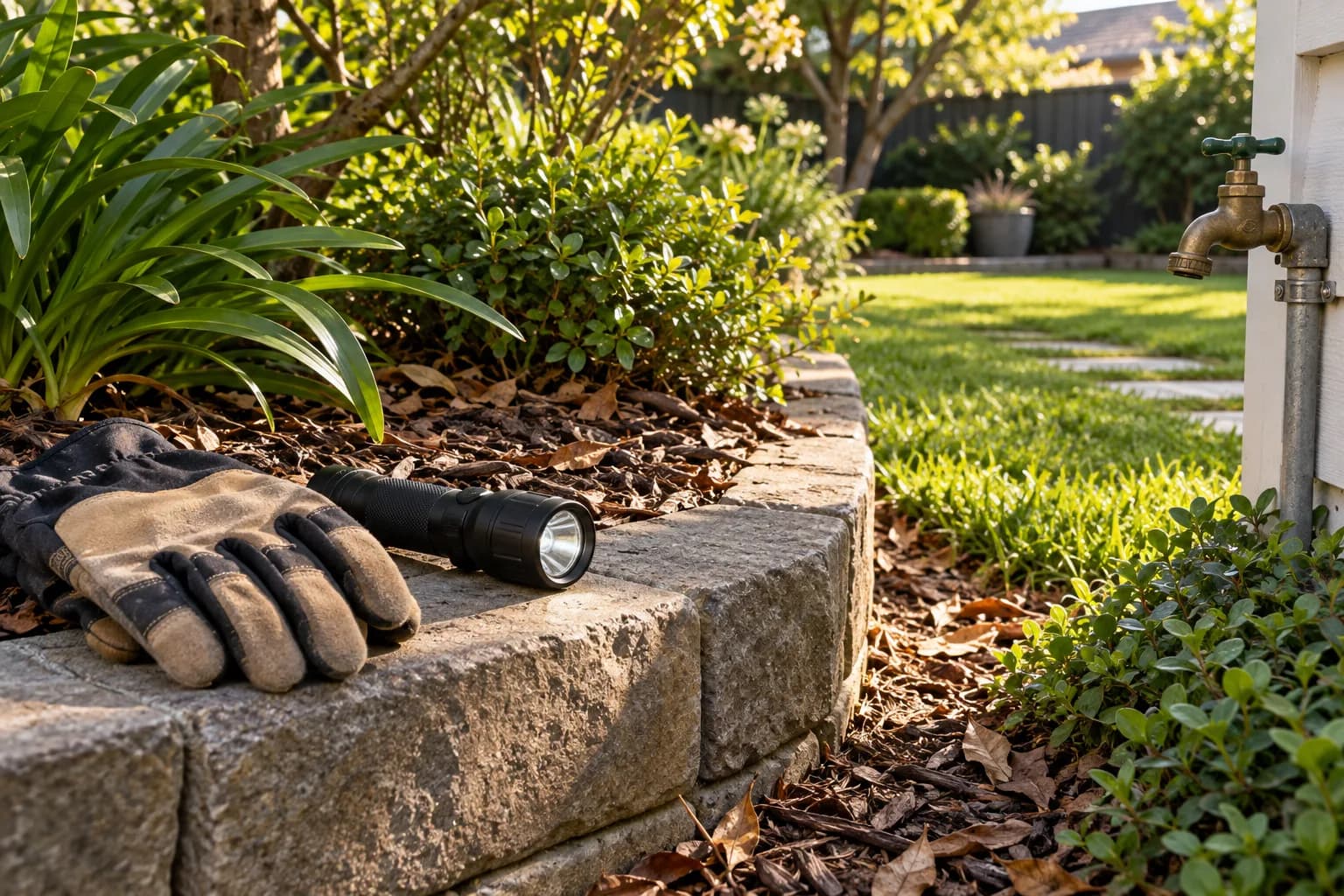 Mulch beds and shady borders next to the lawn are worth checking first.
Mow and rake.
Short grass and removed leaf litter take away the humid shelter ticks need. Focus on the yard edge and high-use areas first — that's where ticks concentrate.
The wood-chip barrier.
A 3-foot strip of wood chips or gravel between the mowed lawn and the woods creates a dry, hot zone ticks don't cross easily. It's the single highest-value change for a wooded yard.
 Ticks wait on grass and brush with their front legs out, ready to grab a passing person or pet.
Keep play areas in the sun.
Move swings, sandboxes, and seating into open, sunny spots away from the brush line. Ticks avoid hot, dry, closely mowed areas.
Protect people and pets.
Use EPA-registered repellents on skin and permethrin on clothing, put vet-approved prevention on pets, shower within two hours of coming inside, and dry clothes on high heat.
Discourage the hosts.
Fewer hosts means fewer ticks. Fence where practical, remove bird feeders that draw mice, and keep woodpiles tidy. Deer and mice bring ticks.
A seasonal prevention calendar.
- Winter: plan and seal — there's little tick activity, but the yard work now pays off in spring. - Fall: rake again and treat the edge before adults peak. - Summer: mow weekly and do daily tick checks after time outdoors. - Spring: rake the winter's leaf litter and add your wood-chip barrier before nymphs emerge. - Tick prevention runs on the season.
Clothing and repellent specifics.
These habits do as much as any yard treatment. For pets: the tick prevention your vet recommends, year-round. For people: an EPA-registered repellent on skin, permethrin-treated clothing for high-exposure days, light colors so ticks are easy to spot, and tucking pants into socks in brush.
Prevention for new builds.
New construction and landscaping are the cheapest times to make a yard tick-resistant: plan the lawn-to-woods transition with a wide mowed buffer and a gravel edge from the start, and site play areas in the sun. Retrofitting a tick-safe edge later is harder and costs more.
Pets and prevention.
The yard work and the pet routine have to work together. Check dogs after every walk, keep kennels and beds away from the brush line, and wash bedding often. Pets are the weak point in most tick-prevention plans — a dog on vet-approved prevention still walks ticks through the house.
Prevention when traveling.
The same daily-check habit you use at home is the one that catches a travel tick. On a hike or trip, stay mid-trail, use repellent, tuck pants into socks in brush, and check yourself and your gear before coming inside. Ticks don't stop at your fence, and neither do you.
Prevention for renters and apartments.
If the shared space is the source, a request to management for edge mowing and leaf cleanup is the yard-work equivalent. Avoid the brushy edges, use repellent, and do a daily check after time outside. Without a yard, your exposure is the shared green space and the paths.
The free prevention habits.
The highest-value prevention is free: check yourself after time outdoors, shower within two hours, and dry clothes on high heat to kill any ticks that hitched a ride. Those three habits — no products, no yard work — remove more risk than anything you can buy.
Prevention through landscaping choices.
Landscaping is prevention you do once and benefit from every season. Prefer open, sunny beds near the house, keep ground cover thin, and avoid dense shrub borders right against doors and play areas. The plants and layout you choose shape tick pressure for years.
Prevention that's worth paying for.
Most prevention is free, but two things are worth the money: a load of wood chips or gravel for the edge barrier, and vet-approved tick prevention for the pets. Those two purchases — the barrier material and the pet product — do more than any gadget or miracle spray.
What affects the price
- Size and terrain of the yard edge being treated.
- Number of visits timed to spring and fall peaks.
- Whether tick tubes or deer/rodent host management is included.
- Access difficulties like steep slopes or dense brush.
- Presence of stone walls and rock piles.
- Monitoring and drag counts after treatment.
📊
What is your biggest concern about ticks?
When to call for help
Call a professional if you keep finding ticks on people or pets, or if your yard backs onto woods, brush, or tall grass. A pro can find the hot spots and time edge treatments to the spring and fall peaks.
What you can do yourself
Most of tick control is yard work you can do yourself: mow, rake leaf litter, and add a wood-chip barrier at the edge. A professional adds targeted edge treatments and drag sampling to confirm where ticks actually are.
Where you live matters
In Tick Prevention, getting the scope, the prep steps, and any follow-up terms in writing makes it much easier to compare providers fairly, and a good provider will walk you through each of these without pressure. In Tick Prevention, before you book, ask whether the inspection is included, what the treatment plan covers, how many visits to expect, and what the written quote includes. A local provider who knows Tick Prevention can point out the specific things that matter most here before you commit to a plan. In Tick Prevention, checking the usual entry points, moisture spots, and sheltered areas near the structure usually turns up the conditions that are letting them in. The most useful first step in Tick Prevention is to note where you have seen ticks activity and when it appears, so an inspection is faster and the quote more accurate. Identify the tick, learn the local species, and check your state or county health department. Tick risk is regional — species and disease risk vary by where you live.
Simple ways to keep ticks away
- Mow regularly and keep grass short.
- Rake and remove leaf litter from high-use areas.
- Add a 3-foot wood-chip or gravel strip between lawn and woods.
- Keep play sets and seating away from the yard edge.
- Use vet-approved tick prevention on pets.
- Shower within a couple of hours of coming inside.
- Dry clothes on high heat to kill any ticks they picked up.
 A simple yard sketch helps: mark where ticks turn up and where kids and pets play.
Did you know?
Larval ticks have six legs; nymphs and adults have eight.
Opossums groom off and eat most of the ticks that try to feed on them.
Ticks don't jump or fly — they wait on vegetation with their front legs out, ready to grab a passing host.
Questions people ask
Do tick repellents work in the yard?
For people, EPA-registered repellents work well. For the yard, habitat work is the lever — sprays are a secondary, targeted tool.
What plants keep ticks away?
No plant reliably repels ticks. The fix is structural: short grass, a dry barrier at the edge, and a clear, sunny perimeter.
How often should I mow?
Keep grass short through the growing season, especially near paths and the yard edge where ticks wait.
Does a wood-chip barrier really work?
It helps by creating a dry, hot gap ticks avoid crossing, and it makes the remaining edge easier to inspect and treat.
What's the single highest-value prevention step?
The wood-chip barrier at the yard edge — a dry, hot strip ticks avoid crossing — combined with short grass and removed leaf litter.
Does tick prevention work year-round?
The yard work is seasonal, but the habits are year-round: tick checks after time outdoors, repellent, and pet prevention matter in any month ticks are active, and in warm regions that can be most of the year.
Does prevention mean I'll never see a tick?
The goal is low risk, not zero. A maintained edge and daily checks catch most of what wildlife brings in, but a tick can always ride in. No — it means low numbers.
When should I start prevention each year?
Before the ticks do — in early spring, before nymphs emerge. Rake the winter litter and lay the wood-chip barrier first, and you're ahead of the season instead of chasing it.
Do I need repellent if my yard is treated?
Yes — treatment and repellent cover different things. The yard treatment reduces the edge, but repellent protects you on hikes, in the shared green space, and anywhere wildlife still passes through.
Sources (8)
The facts in this article come from the public sources listed above. Every home is different, so ask the company you talk to about pricing and what’s included. Published by Tick Exterminator · Updated October 13, 2026 · How we write these guides